

Published December 17, 2025
HELOC 101: How a Home Equity Line of Credit Really Works (and When to Use It)

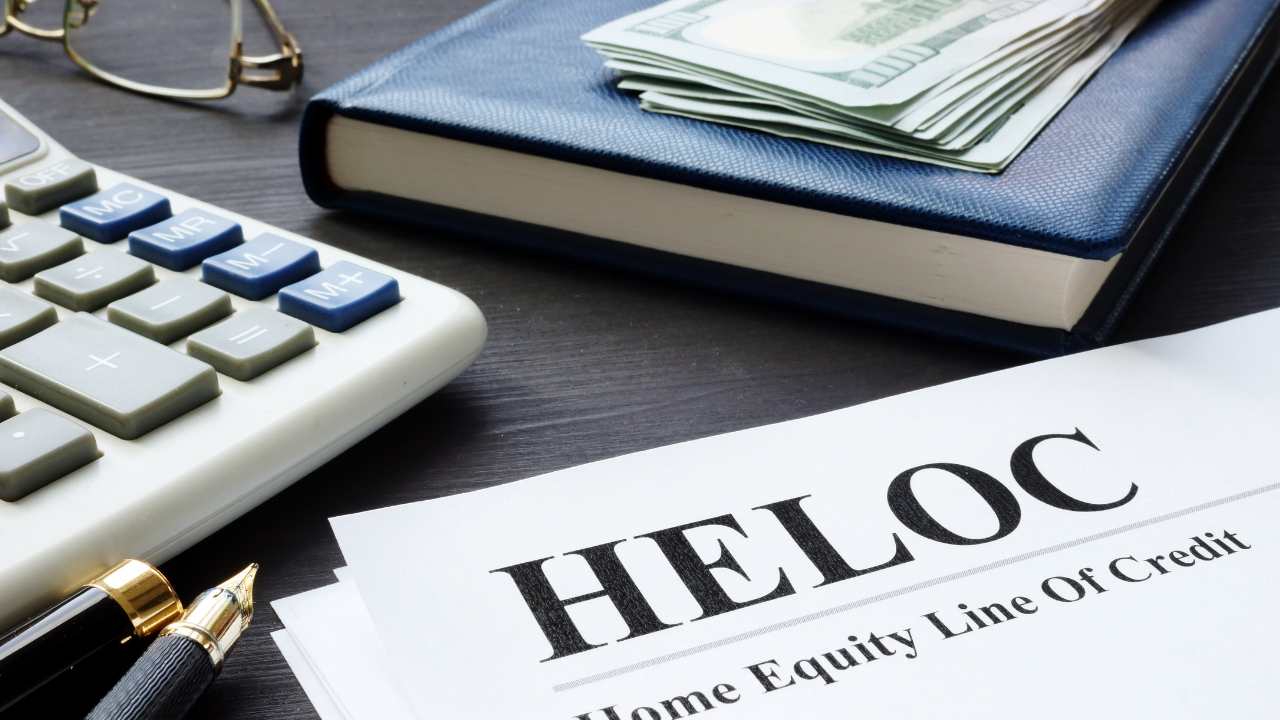
If you’re a homeowner, you’ve probably heard the term HELOC thrown around—maybe by your bank, on a podcast, or from a friend who used one to remodel their kitchen.
But what is a HELOC, really? How does it work? And how do you know if it’s a smart move for you—or a risk you should avoid?
In this post, we’ll walk through what a HELOC is, how it works, who qualifies, the pros and cons, and a real-life example to make it all easier to understand.
What Is a HELOC?
HELOC stands for Home Equity Line of Credit.
It’s a type of loan that lets you borrow against the equity you’ve built in your home. Equity is simply:
Home’s current value – What you still owe on your mortgage
For example:
-
Your home is worth $550,000
-
You owe $370,000 on your mortgage
-
You have $180,000 in equity
A HELOC lets you tap into a portion of that equity.
But here’s the key difference:
A HELOC is not one big lump sum like a traditional loan. It’s a revolving line of credit, much like a credit card—with a much lower interest rate.
You’re approved for a maximum amount (say, $75,000), but you only borrow what you need, when you need it. And you only pay interest on what you actually use.
HELOC vs. Home Equity Loan: What’s the Difference?
People often mix these two up, so let’s simplify:
Home Equity Loan
-
You get one lump sum up front
-
Fixed interest rate
-
Fixed monthly payments
-
Best for one-time, known costs (e.g., a single project or expense)
HELOC (Home Equity Line of Credit)
-
You get a revolving line of credit
-
You can borrow, repay, and borrow again up to your limit
-
Often has a variable interest rate
-
Best as a flexible financial tool for ongoing or unpredictable expenses
Think of a home equity loan as a traditional loan, and a HELOC as a flexible credit line backed by your home.
How a HELOC Works: Draw Period vs. Repayment Period
Most HELOCs have two main phases:
1. The Draw Period
This usually lasts 5–10 years.
During this time:
-
You can borrow from the line of credit whenever you need to
-
Many lenders require interest-only payments
-
Your monthly payment tends to be relatively low
This is the “access and use” phase.
2. The Repayment Period
After the draw period ends, you enter the repayment period, which usually lasts another 10–20 years.
During this time:
-
You can no longer borrow from the HELOC
-
You start paying back both principal and interest
-
Your monthly payment will increase, sometimes significantly
This is the “pay it back” phase—so it’s important to be prepared for that shift.
A Real-Life Example
Let’s look at a simple scenario similar to what many homeowners experience.
-
A couple in Centerville, Virginia bought a home in 2017 for $420,000
-
By 2024, their home was worth about $575,000
-
They’d paid down their mortgage to around $310,000
That means they had around $265,000 in equity.
Their lender approved them for a $100,000 HELOC.
-
They didn’t use it at first—it just sat there as a safety net
-
Later, they decided to renovate their kitchen and replace the HVAC system
-
They borrowed $45,000 from the HELOC
During the draw period, their payment was about $260/month, because they were only paying interest.
Once the repayment period began, their payment increased to around $480/month, because they were now paying principal + interest.
This example shows why it’s important not just to look at the starting payment, but also what it will look like later.
Common Uses for a HELOC
HELOCs are popular because they’re flexible. Homeowners often use them for:
-
Home improvements (kitchens, bathrooms, roofs, HVAC, etc.)
-
Debt consolidation (paying off higher-interest credit cards or personal loans)
-
Education costs
-
Major medical expenses
-
Starting or funding a business
-
Emergency reserve for big unexpected costs
But just because you can use the money for almost anything doesn’t mean you should. Remember:
A HELOC is secured by your home. Misusing it can put your house at risk.
The Risks: Why a HELOC Isn’t “Free Money”
A HELOC is a lien on your home.
If you can’t repay what you borrow, the lender has the right to foreclose, just like with your primary mortgage.
Other key risks:
-
Variable interest rates – Your rate (and payment) can go up over time
-
Payment shock – Payments often jump when the repayment period begins
-
Temptation to overspend – Easy access to credit can lead to unnecessary or non-productive spending
That’s why a HELOC should be used strategically, not casually.
Who Qualifies for a HELOC?
Every lender is different, but most look at similar factors:
1. Sufficient Home Equity
You usually need at least 15–20% equity in your home after accounting for the HELOC.
2. Credit Score
Many lenders look for a minimum score around 620, but
a 700+ score typically gets you better interest rates.
3. Debt-to-Income Ratio (DTI)
Lenders want to see that your total monthly debts (mortgage, car, credit cards, student loans, plus the potential HELOC payment) don’t exceed about 43% of your gross monthly income.
4. Stable Income
You’ll usually need to show:
-
W-2s
-
Tax returns
-
Or business income documentation if you’re self-employed
Pros and Cons of a HELOC
Let’s sum it up.
 Pros
Pros
-
Lower interest rates than most credit cards and personal loans
-
Flexibility: borrow, repay, and borrow again
-
Interest-only payments during the draw period (in many cases)
-
Can be a great tool for home improvements or consolidating higher-interest debt
 Cons
Cons
-
Variable interest rates = payments can rise over time
-
Payment shock when moving from interest-only to full repayment
-
Your home is on the line if you can’t pay
-
Easy access to funds can encourage overspending
Is a HELOC Right for You?
A HELOC can be a powerful financial tool if:
-
You’re confident in your income and job stability
-
You have a clear purpose for the funds (not just “extra spending money”)
-
You understand how the draw and repayment phases work
-
You’re comfortable with variable rates (or have access to fixed-rate options on portions of the balance)
It may not be ideal if:
-
Your income is unstable or uncertain
-
You’re tempted to use it for lifestyle spending that doesn’t build value
-
You’re already stretched thin with debt and monthly payments
Live in Virginia and Thinking About a HELOC?
If you’re in Virginia and curious about your options, you don’t have to figure this out alone.
We can help you:
-
Estimate how much equity you’ve built in your home
-
Understand whether a HELOC, home equity loan, or another solution makes the most sense
-
Connect with trusted local lenders
-
Walk through the numbers so you feel confident—not confused
If you’re wondering, “Is a HELOC right for me?”, that’s your signal to ask questions before signing anything.
You don’t need to guess.
Let’s talk it through and find what fits your situation, not just what’s popular