


Published November 2, 2026
How Much House Can You Afford in Northern Virginia?

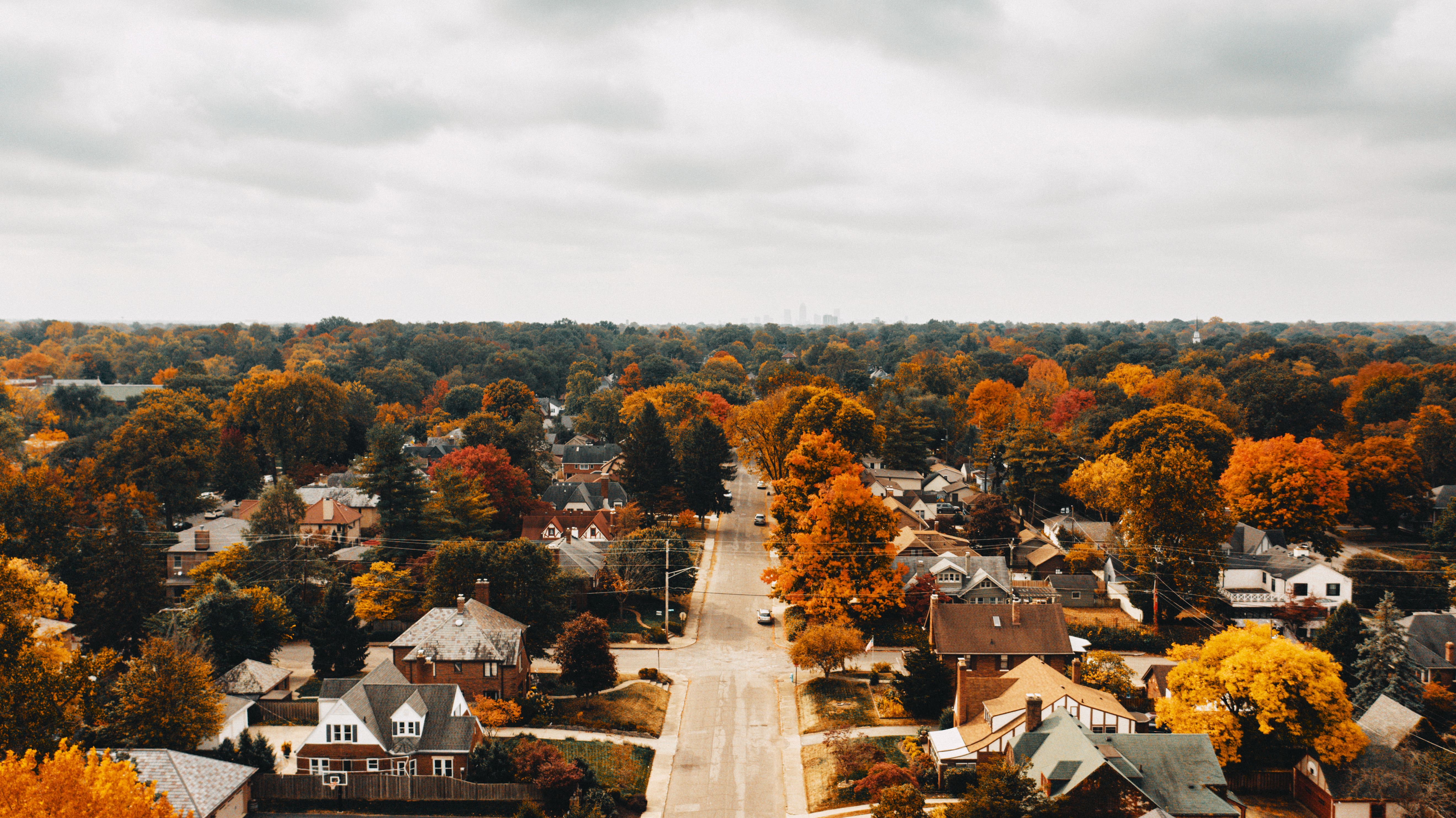
How much house can you afford in Northern Virginia? Start with the amount you can comfortably spend each month, the cash you can bring to closing, and the savings you want to keep afterward.
Those numbers are more useful than a listing-price filter alone. A home in Fairfax County, a townhouse in Ashburn, and a condo in Arlington can carry different taxes, association fees, insurance needs, and maintenance responsibilities—even when their purchase prices are similar.
This guide explains how to build a practical homebuying budget, compare financing options, and evaluate a property's full cost before making an offer.
Start with a monthly budget you can live with
A lender's preapproval helps establish what you may qualify to borrow. Your own budget establishes what you are comfortable spending while keeping room for the rest of your life.
Review your take-home income and actual spending. Include existing debt payments, transportation, groceries, healthcare, savings, and any other commitments you expect to continue after buying. Decide how much you want left over each month.
Set two boundaries before touring: a target monthly ownership budget and a maximum you would only consider after reviewing the complete numbers.
Calculate the full monthly cost of owning the home
Principal and interest repay the loan. Your broader housing budget also needs to account for:
- Property taxes for the specific parcel.
- Homeowners insurance and any additional coverage the property or lender requires.
- Mortgage insurance, when applicable.
- HOA or condominium dues, including both if the property has separate associations.
- Utilities and routine maintenance.
- Money set aside for repairs and replacements.
Some expenses may be collected through your lender's escrow account; others are paid separately. Count each cost once. A payment calculator showing only principal and interest is not a complete ownership budget.
Example: the monthly budget for a $750,000 home
Assume a $750,000 purchase, a $75,000 down payment, and a $675,000 loan. At a hypothetical 7.00% fixed interest rate over 30 years, with no financed fees, principal and interest would be approximately $4,491 per month.
The remaining amounts below are invented planning inputs, not Northern Virginia averages, tax estimates for a particular jurisdiction, or insurance and mortgage-insurance quotes.
| Monthly item | Illustrative amount |
|---|---|
| Principal and interest | $4,491 |
| Property taxes | $700 |
| Homeowners insurance | $150 |
| HOA dues | $150 |
| Mortgage insurance | $175 |
| Housing subtotal | $5,666 |
| Utilities | $275 |
| Monthly repair and maintenance savings | $300 |
| Illustrative ownership budget | $6,241 |
The $300 repair allowance is a placeholder, not a recommendation for every home. An older roof, aging HVAC equipment, or deferred maintenance may require a much larger reserve. Replace every assumed cost with property-specific information and lender or insurance quotes.
Interest rates also change the calculation. At a hypothetical 8.00% rate, the same $675,000 loan over 30 years would have principal and interest of approximately $4,953—about $462 more each month. These examples are calculations, not current loan offers.
Check Northern Virginia property costs before making an offer
Review the actual tax record
Use the property's applicable county or city records to check its assessed value, current tax bill, and additional charges. Do not apply one assumed tax rate to every Northern Virginia listing.
For example, Fairfax County calculates real estate taxes using the assessed value and applicable rates; special district taxes or service fees may also affect the bill. A purchase price is not a substitute for checking the parcel's assessment and tax information. Review Fairfax County's official real estate tax resources.
Read beyond the HOA fee
Ask what association dues cover, which expenses remain yours, and whether the documents identify pending increases or special assessments. For a condo, review the association's budget and reserve information as well as the monthly fee. Confirm the coverage you need with an insurance professional.
Connect condition to your cash budget
A lower purchase price can be less helpful if the home needs immediate work. Use inspections and qualified contractor estimates to separate urgent repairs from improvements that can wait. Include commuting, parking, and toll costs when comparing locations, too.
Understand how lenders use your income and debts
Your debt-to-income ratio, or DTI, compares monthly debt obligations with gross monthly income, before taxes and other deductions. A lender evaluates the proposed housing expense along with other required debt payments.
For example, $5,000 in qualifying monthly housing costs plus $1,000 in other monthly debts equals $6,000. Dividing that by $15,000 in gross monthly income gives a 40% DTI.
That is an example, not an approval threshold. Limits vary by lender and loan program, and qualification also involves factors such as credit, assets, and income documentation. Your personal budget should still consider expenses that a DTI calculation does not fully capture. Learn how the CFPB defines DTI.
Compare down payment options without draining your savings
You do not always need 20% down to buy a home. Depending on eligibility, property, and loan program, options may include:
- Conventional financing: certain programs offer down payments as low as 3% for eligible borrowers.
- FHA financing: down payments can be as low as 3.5% for eligible borrowers, with mortgage insurance required.
- VA financing: eligible borrowers may qualify without a down payment and without monthly mortgage insurance. A VA funding fee may apply unless exempt. Appraisal, entitlement, and lender requirements still matter. Review VA purchase-loan eligibilityand funding fees.
- USDA financing: qualifying borrowers purchasing an eligible property may have a no-down-payment option. Verify both household income and property-location eligibility. Explore USDA's official housing programs.
For conventional loans, putting less than 20% down commonly means paying private mortgage insurance. The CFPB explains PMI here. Ask a lender to compare upfront cash, monthly costs, and the savings you would retain under each option.
Eligible buyers can also ask about Virginia Housing assistance. Its down payment grant has program requirements, including income and sales-price or loan limits, and must be paired with an eligible Virginia Housing loan. Check current grant eligibility.
Budget for closing costs and the money you need afterward
Your down payment is only part of the cash needed to buy. The CFPB gives a broad closing-cost planning range of 2%–5% of the purchase price, separate from the down payment. Actual costs depend on the transaction and loan.
For a $750,000 purchase, that range is $15,000–$37,500. With 10% down, the combined down payment and estimated closing costs would be $90,000–$112,500, before moving expenses and the reserves you plan to retain.
Use a lender's property-specific estimate to refine the numbers, including prepaid taxes, insurance, and any initial escrow deposit. Ask what is included so you do not add the same item twice. Keep funds available for moving, initial repairs, and emergencies.
Get preapproved, then compare the complete loan offers
Get preapproved when you are ready to shop seriously, and ask what information the lender has verified. Preapproval is conditional; it does not guarantee final financing.
Compare loan options using the same purchase price, down payment, and loan term. Ask about the rate, points, lender fees, mortgage insurance, estimated cash to close, and any payment changes. A lower advertised rate can carry a higher upfront cost.
If a quote includes a temporary payment buydown, ask what the payment becomes after it ends. Build a budget that works without relying on a future refinance.
Your home affordability checklist
- Set a comfortable monthly budget using take-home income and actual spending.
- Confirm loan eligibility and compare financing options with a lender.
- Check parcel-specific taxes, insurance quotes, and association charges.
- Price urgent repairs and preserve savings after closing.
- Include commuting costs and other recurring expenses.
- Choose a purchase-price range that fits the complete budget.
Frequently asked questions
How much income do I need to buy a home in Northern Virginia?
There is no single salary requirement for the region. The answer depends on the purchase price, financing, debts, down payment, property expenses, and lender requirements. Work backward from a comfortable monthly budget, then have a lender evaluate qualification.
Does a fixed-rate mortgage mean my total payment never changes?
No. The principal-and-interest payment on a standard fixed-rate loan is generally stable, but taxes, insurance, and association charges can change. Keep room in your budget for those increases.
Should I buy at the top of my preapproval amount?
Use your preapproval as a financing boundary, then choose a target that also supports your savings, ongoing expenses, and plans. Approval alone does not establish a comfortable personal budget.
Build a Northern Virginia home search around your budget
DCI Homes can help you compare locations, property types, association costs, and home condition while you work with a lender on financing. Our real estate and construction perspective can also help you identify repair questions to investigate before committing to a property.
Contact DCI Homes to plan your Northern Virginia home search.